
EXPLOSIVE YouTube Video Ideas for Your Gaming Channel
Let's be real, you've probably stared at your screen thinking "every gaming video's been done already." You're uploading consistently, but the views aren't showing up, and watching bigger channels dominate feels like bringing a knife to a tank fight.
I get it. Spending 10 hours editing a video that flops? That's a special kind of pain.
But here's what I know: viewers aren't just looking for gameplay, they're looking for you. The right video ideas can turn your channel from crickets to community. I'm talking about content that pulls in non-subscribers, keeps them watching, and actually shows up in search.
Ready to create videos people actively hunt for? Let's crack into gaming content that builds loyal viewers who come back for you, not just the game you're playing.
11 Proven Types of Gaming Videos:
1. Let's Play Series
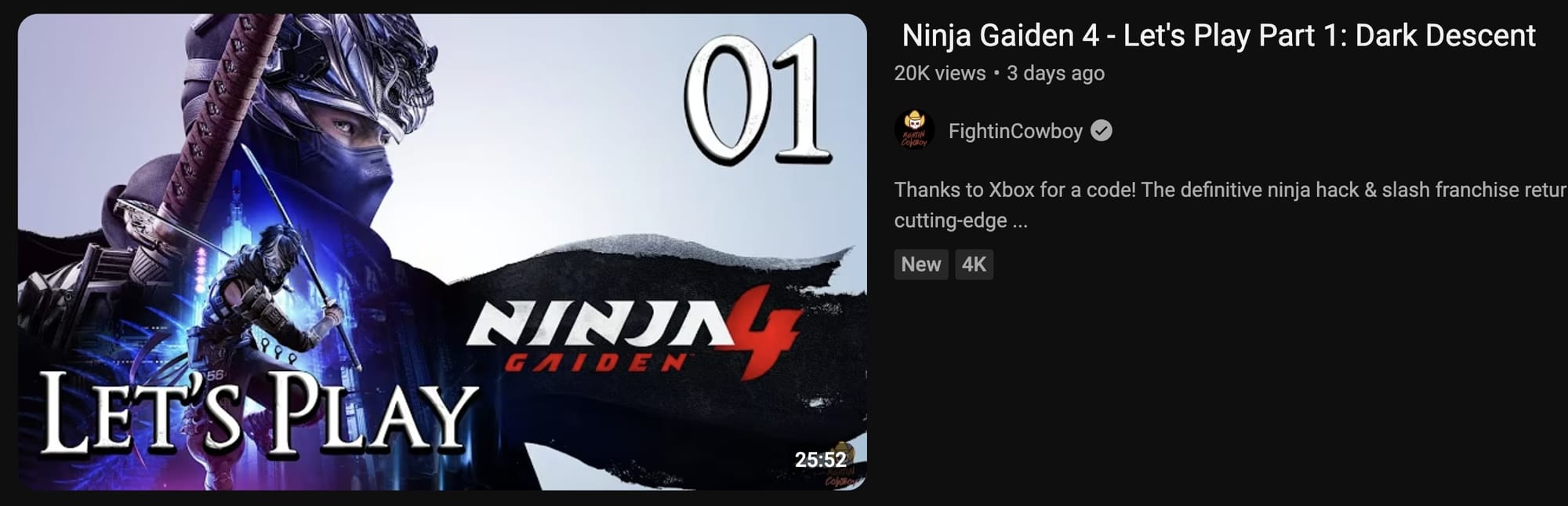
Let's Plays work when you're the main character, not the game. Your personality, reactions, and commentary turn basic gameplay into entertainment that viewers choose over playing the game themselves.
Think about it, nobody watches a Let's Play for perfect gameplay. They're here for your terrible jokes during boss fights, your genuine shock at plot twists, and that weird voice you do for NPCs. Your commentary transforms gameplay into a shared experience.
Mix it up with your game selection:
- Play the latest AAA title while it's hot (hello, algorithm)
- Throw in that indie gem nobody's heard of
- You'll face less competition and might become the channel for that game
Keep episodes between 20-30 minutes, it's the sweet spot for watch time without scaring people off, especially if you’re new. Post on a schedule your viewers can count on. Tuesday and Thursday? Every weekday? Pick what you can stick to, because consistency beats perfection every time.
2. Live Streaming Highlights & Compilations
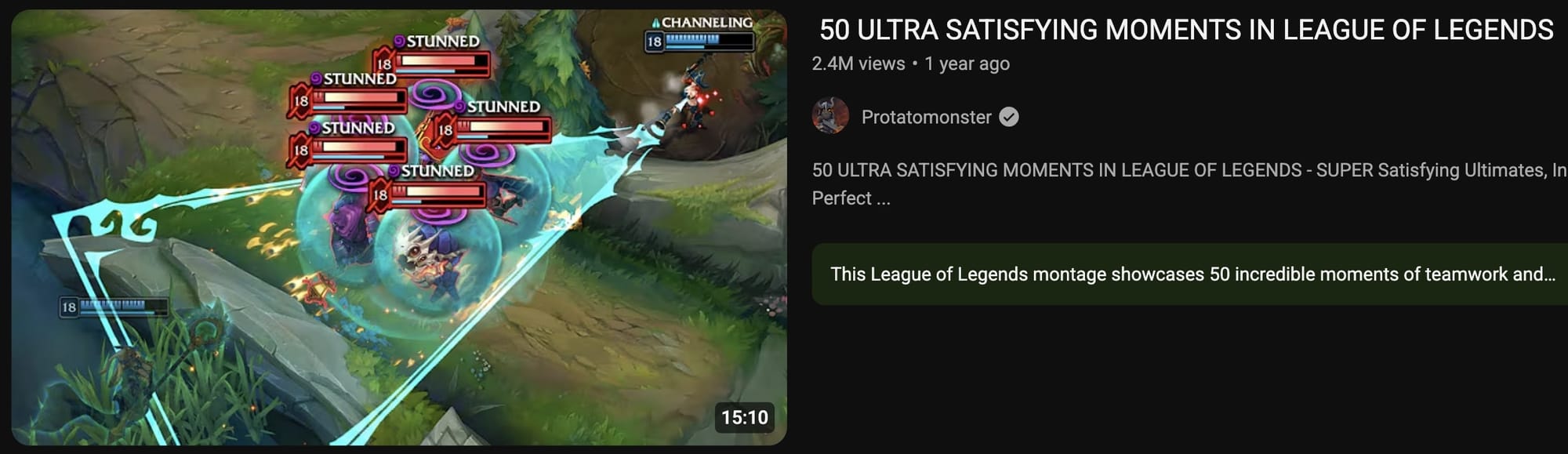
Got hours of stream footage sitting around? That's content gold waiting to happen. Every stream has at least 3-4 videos hiding inside it if you know where to look.
Your compilation style depends on your streaming personality:
- Class clown? Create "Best Rage Moments" or "Times I Broke the Game"
- Skilled player? Go for "Insane Clutch Plays" or "Perfect Speedrun Attempts"
- Failed spectacularly? "Epic Fails Compilation" videos practically edit themselves
Cut aggressively with these editing tricks:
- Remove dead air, loading screens, and map-running moments
- Add zoom-ins on funny faces
- Speed up boring parts
- Include subtitles for the best one-liners
3. Educational & Guide Content
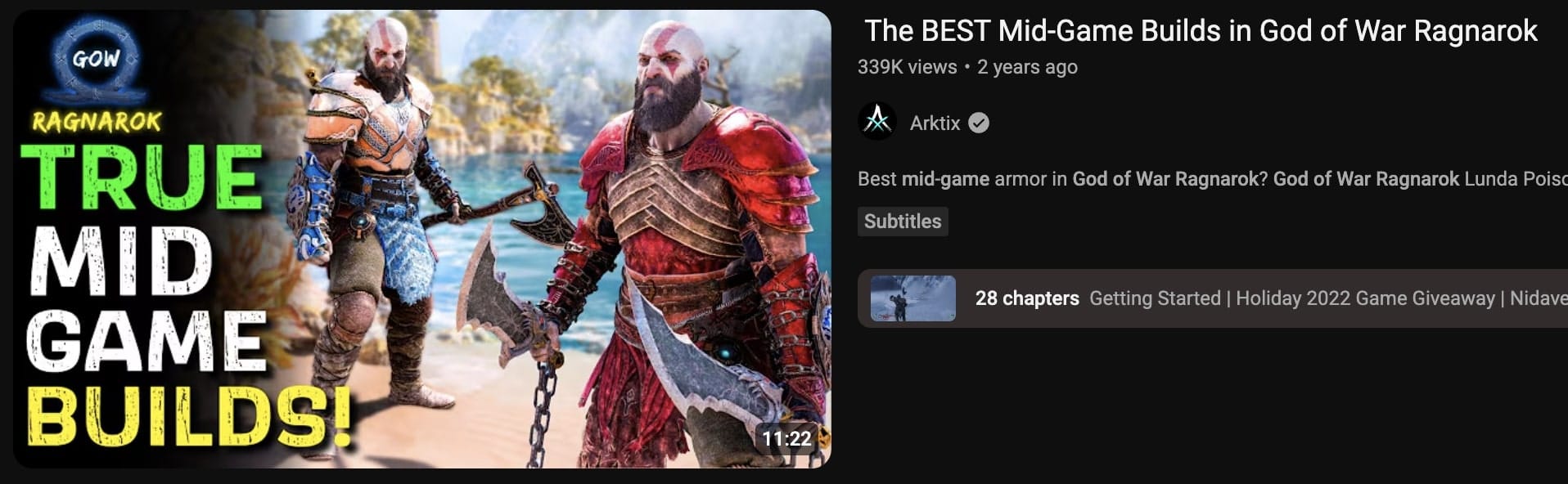
Tutorial videos are the gift that keeps on giving. While Let's Plays die when a game gets old, a solid guide pulls views for years.
Start with beginner guides for complex games. "How to Actually Win Your First Game in [Battle Royale]" beats another generic gameplay video any day. Then level up to:
- Advanced techniques and secret strategies
- Character builds that break the game
- Hidden mechanics the tutorial didn't teach you
Structure is everything in tutorials. Hit them with the solution in the first 30 seconds, then explain the how and why. Timestamps aren't optional, they're essential. Nobody wants to scrub through 20 minutes to find that one tip they need.
4. Gaming News & Commentary
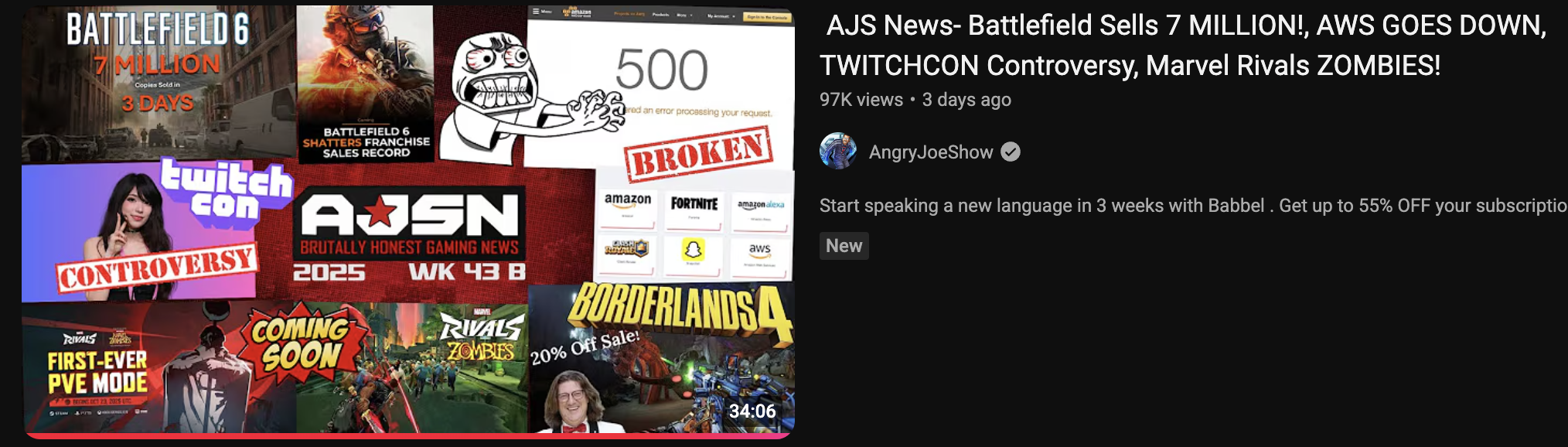
Gaming news moves fast, but being first means nothing if you're just reading press releases like everyone else.
Stay plugged into the industry without drowning in it:
- Follow key insiders on X
- Bookmark reliable gaming sites
- Actually read those developer blogs
- Join Discord servers where leaks drop first
Your take makes the difference. Instead of "New game announced," try "Why [New Game] might save the franchise (or kill it)." Add your experience, predictions, and honest reactions. Viewers have Google, they come to you for perspective.
Speed matters, but getting it wrong kills credibility faster than any algorithm boost is worth. If you're not sure, say so. "Rumors suggest" beats having to post corrections later. Mix breaking news with weekly deep dives where you really dissect what these changes mean for gamers.
5. YouTube Shorts: Tips, Tricks & Easter Eggs
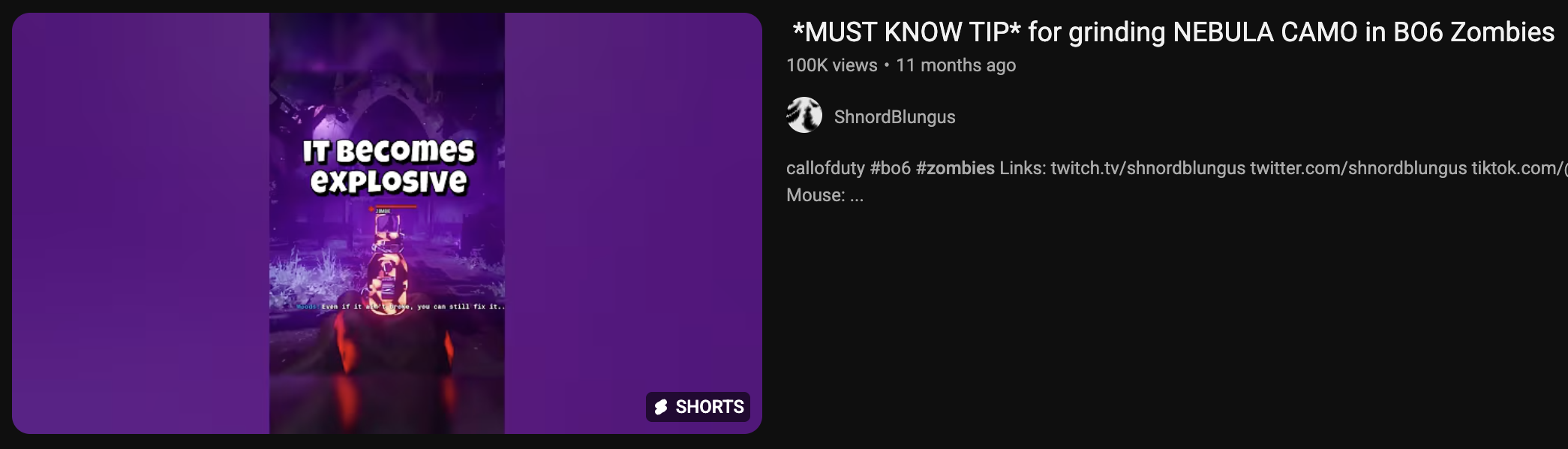
These videos are YouTube Shorts waiting to happen. Quick, valuable, and perfect for viewers who want to get better without the commitment.
Jump on new releases within the first week. While everyone's doing first impressions, you're the one showing them:
- The secret boss they missed
- That broken weapon combo the devs didn't intend
- Achievement guides for the completionists
- Speedrun shortcuts that save minutes
Do your homework though. Nothing kills your reputation faster than spreading false tips. Test everything yourself, double-check with reliable sources, and give credit where it's due.
6. Reaction Videos & First Impressions
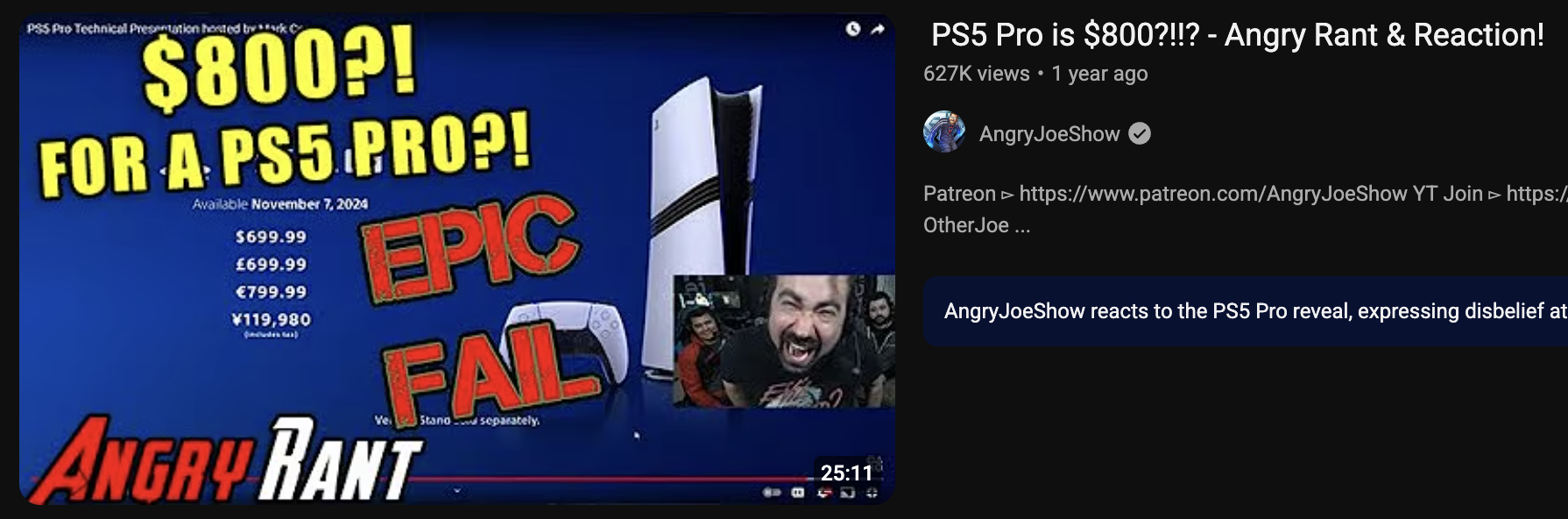
Reaction videos hit different when you're genuinely experiencing something for the first time. Fake hype is obvious, but real excitement? That's content gold.
Game trailers, state of play announcements, and Nintendo Directs are reaction video jackpots. Your genuine confusion at that plot twist or excitement over that sequel announcement connects with viewers feeling the same way. Just watch your back with other creators' content, always get permission first or stick to official releases.
Your setup doesn't need to be fancy:
- Face cam in the corner (OBS makes this easy)
- Original video playing with your audio slightly louder
- Good lighting on your face (seriously, this matters more than your camera quality)
- Pause to add commentary, don't just sit there nodding
Fair use is tricky territory. Pausing to add substantial commentary? Generally okay. Playing the whole trailer while saying "wow" twice? That's pushing it. When in doubt, keep the original video under 70% of your total runtime and add real insight, not just "oh that's cool."
7. Community-Driven Content
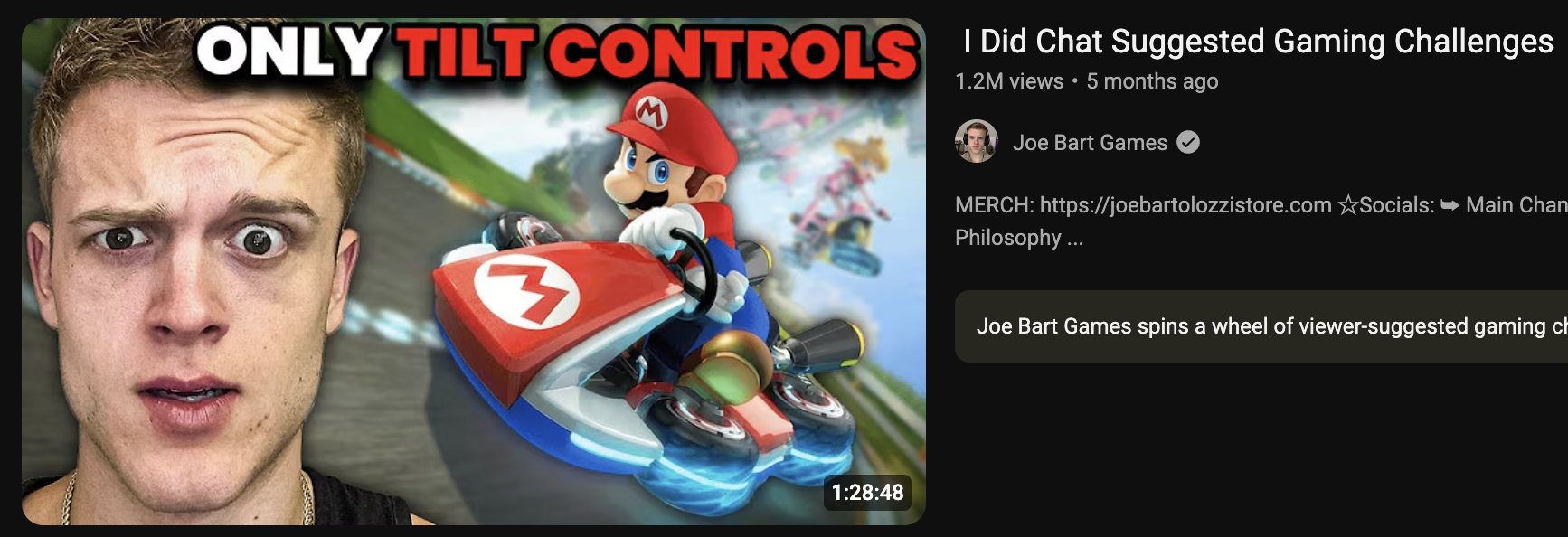
Viewer Challenges & Requests
Nothing builds loyalty like actually listening to your audience. They suggest it, you play it, everyone wins.
Start small with viewer challenges. "Beat Dark Souls with a dance pad" sounds fun until you're 8 hours deep and questioning life choices. Test the waters with simpler stuff:
- Viewer weapon loadout challenges
- "Chat chooses my decisions" playthroughs
- Character creation contests where viewers vote
- Speed challenges suggested by comments
Set boundaries early. "I'll try viewer challenges every Friday" beats getting 50 requests daily you can't fulfill. Create a submission system, maybe a dedicated Discord channel. This keeps expectations realistic and your sanity intact.
8. Multiplayer & Collaboration Videos
Collabs are like a great night out, everyone benefits and nobody shuts up about it afterward (in a good way).
Co-op campaigns with other creators double your exposure. Their audience meets you, yours meets them, and the chemistry between players creates moments solo content can't touch. Start with creators your size, nobody likes one-sided collabs where someone's clearly doing charity work.
Finding collab partners that actually work:
- Join creator Discord servers in your niche
- Engage genuinely with similar-sized channels
- Offer value first ("Want to team up for that new co-op mode?")
- Keep time zones in mind (3 AM recordings suck)
9. Technical & Behind-the-Scenes Content
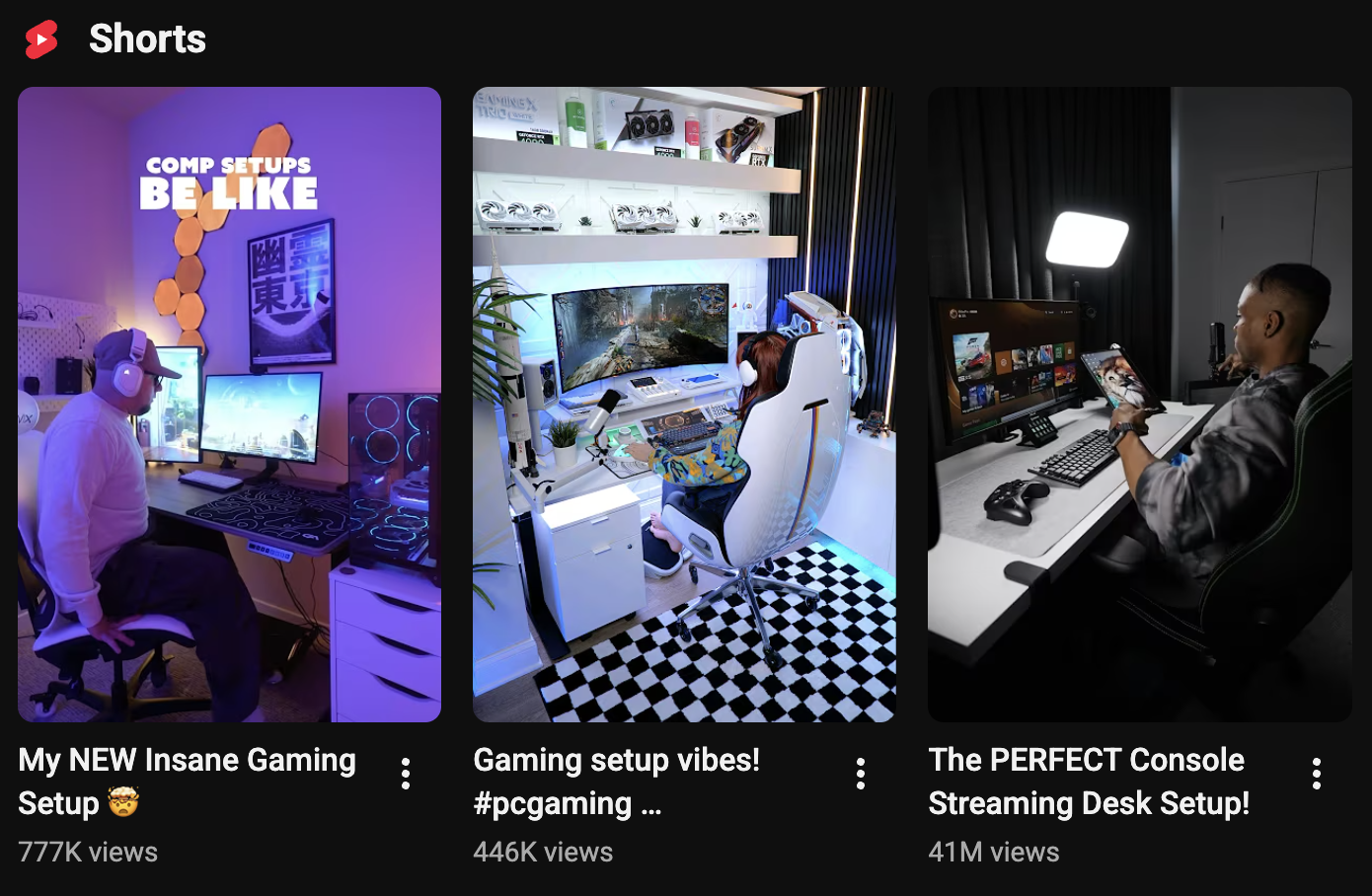
Setup Tours & Tech Reviews
People are nosy about your setup, and that's monetizable nosiness right there.
Gaming setup tours pull views from curious gamers and RGB addicts alike. Show off your battle station, but make it useful:
- Explain why you chose each piece
- Share budget alternatives that work nearly as well
- Mention what you'd change with unlimited budget
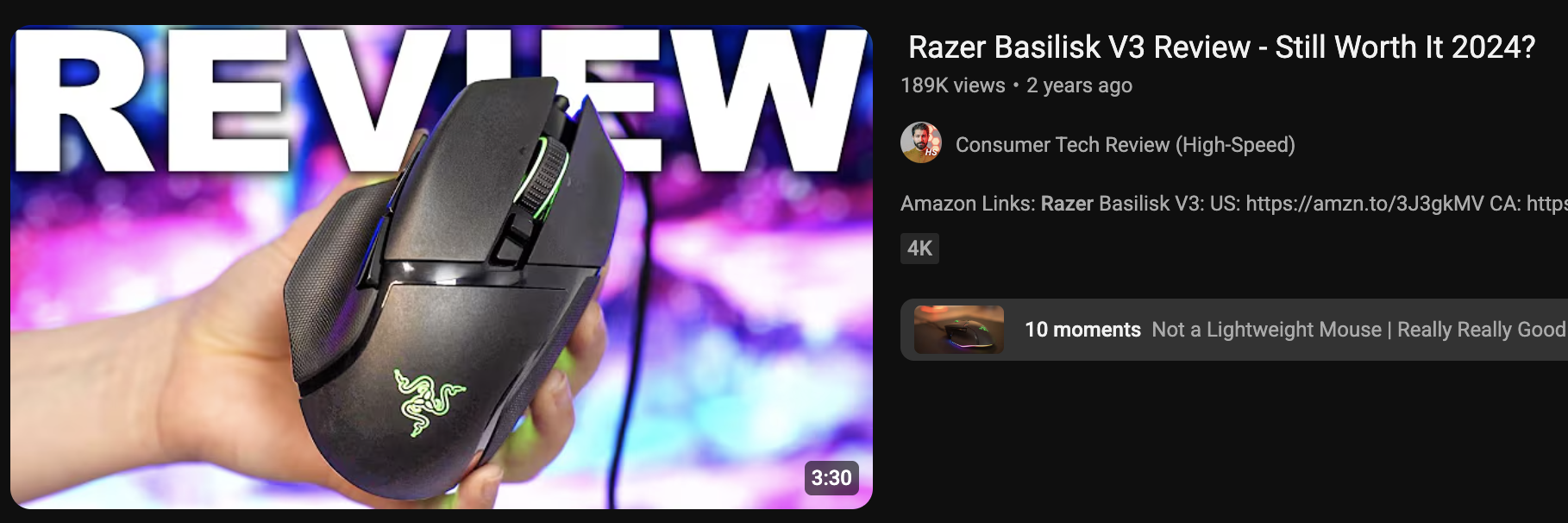
Peripheral reviews are affiliate marketing paradise. That new controller, gaming mouse, or headset? Review it honestly, drop affiliate links, and watch passive income roll in. Just don't become a shill, credibility dies when everything's "literally perfect."
Keep the production value high for tech content. Good B-roll footage, multiple angles, and actual testing footage beat talking at a product for 10 minutes. Show the mouse sensor in action, demonstrate the headset's sound isolation, make it visual.
10. Game Development Content
While everyone's playing games, you're showing how they're made.
Indie showcases put you on developers' radars. Cover their game before it blows up, and suddenly you're the channel that "discovered" them. Focus on upcoming releases, Steam Next Fest demos gems nobody's talking about yet.
Building developer relationships pays off:
- Email developers directly (they're usually approachable)
- Join game dev Discord servers
- Offer honest insightful feedback, not just praise
- Cover their development journey, not just the final product
Developer interviews set you apart from pure gameplay channels. They give you an authority not many people in the gaming space have.
Ask about design decisions, cut content, and development struggles. These stories create content viewers can't get anywhere else, especially from bigger channels too busy to care about indies.
11. Monetizable Content Ideas for Gaming Channels
Let's talk money, because passion doesn't pay rent.
Gaming gear reviews with affiliate links print money when done right:
- Controllers, keyboards, mice, headsets
- Gaming chairs (yes, really)
- Capture cards and streaming equipment
- Even gaming glasses and energy drinks
Create tutorials that lead to paid resources. Free YouTube guide on "Getting Started in Competitive FPS" leads to your $10 aim training routine PDF. Or that modding tutorial series that promotes your paid Discord where you offer direct help.
How to Pick Games That Will Actually Grow Your Channel
Pick wrong, and even killer content dies in obscurity. Pick right, and average videos still get views.
I used to think playing whatever I wanted was the move. Then I spent 40 hours on a series that got 12 views total. Now I know better: passion matters, but strategy pays the bills.
Check the search volume!
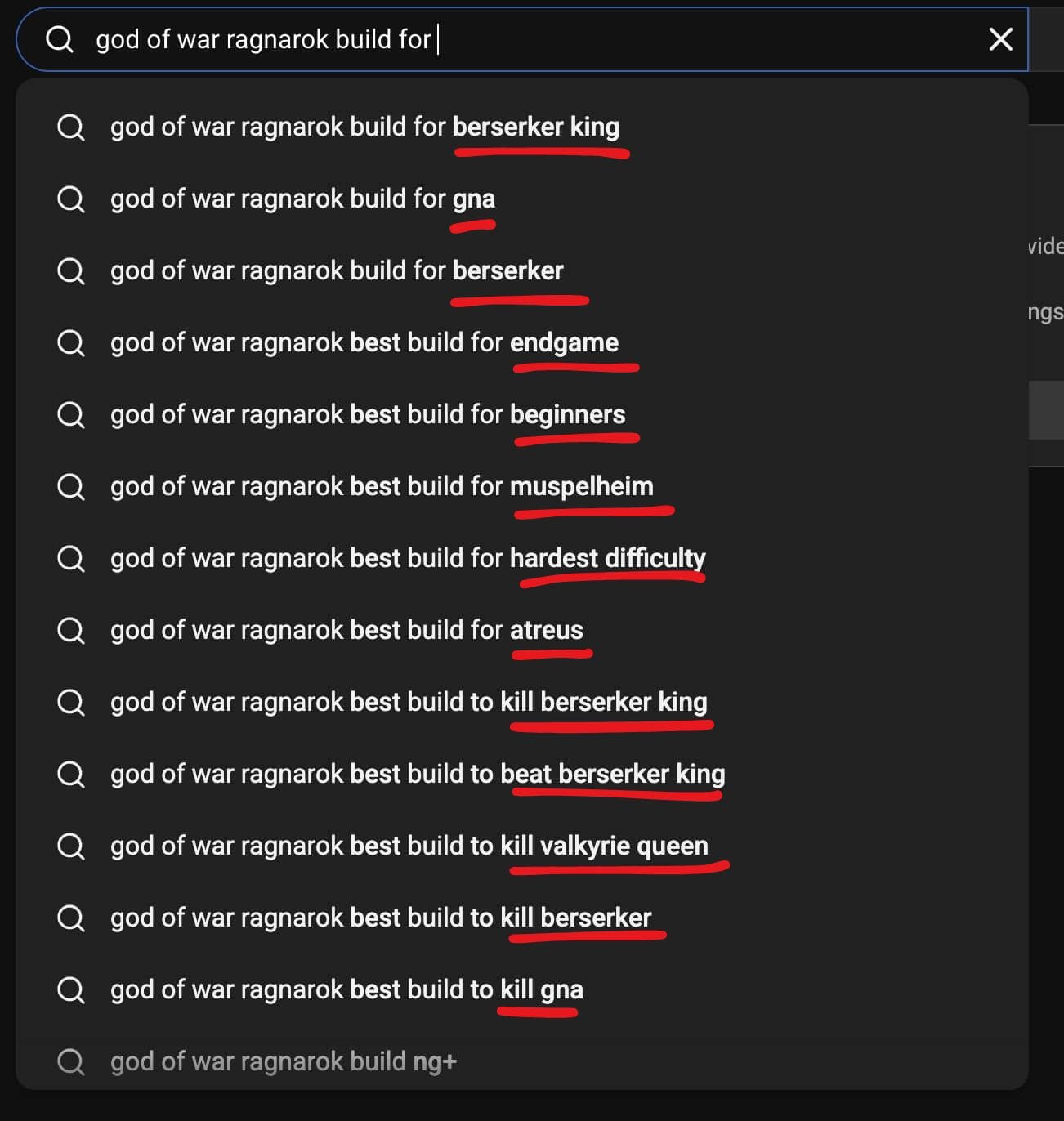
Before you hit record, hit the search bar. Type your game idea into YouTube and look at those autofill suggestions. If YouTube's suggesting "gameplay," "walkthrough," or "guide" after the game name, people are actively searching for it.
Here's my quick search test:
- Type "[Game name]" into YouTube, check if it autofills
- Look at view counts on recent videos (past month)
- Search "[Game name] guide" and "[Game name] tips"
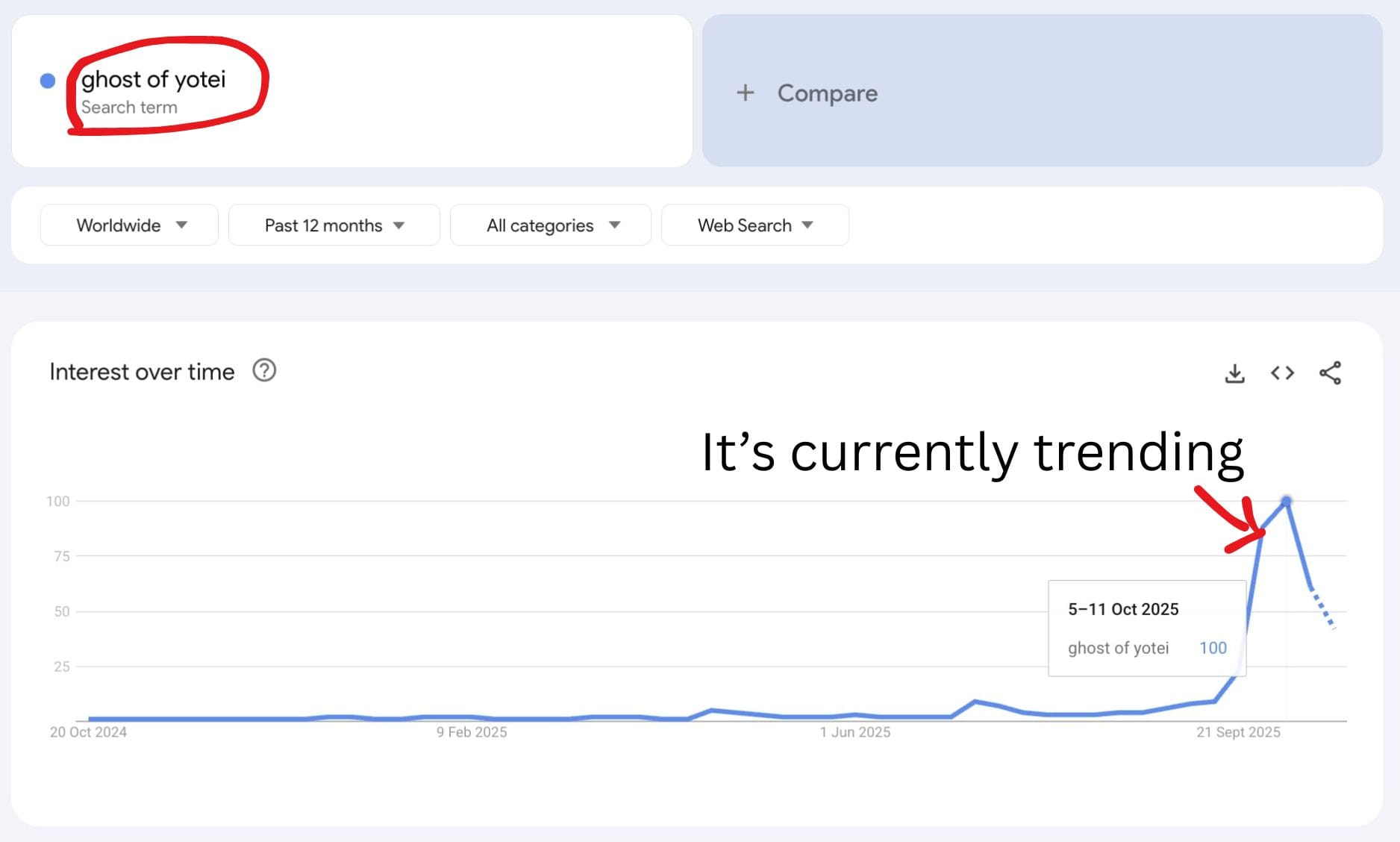
Google Trends tells the real story. Flat line? Skip it. Rising trend? Jump on it. Massive spike that already peaked? You're probably too late unless you've got a unique angle.
Let's see what it looks like on YouTube.
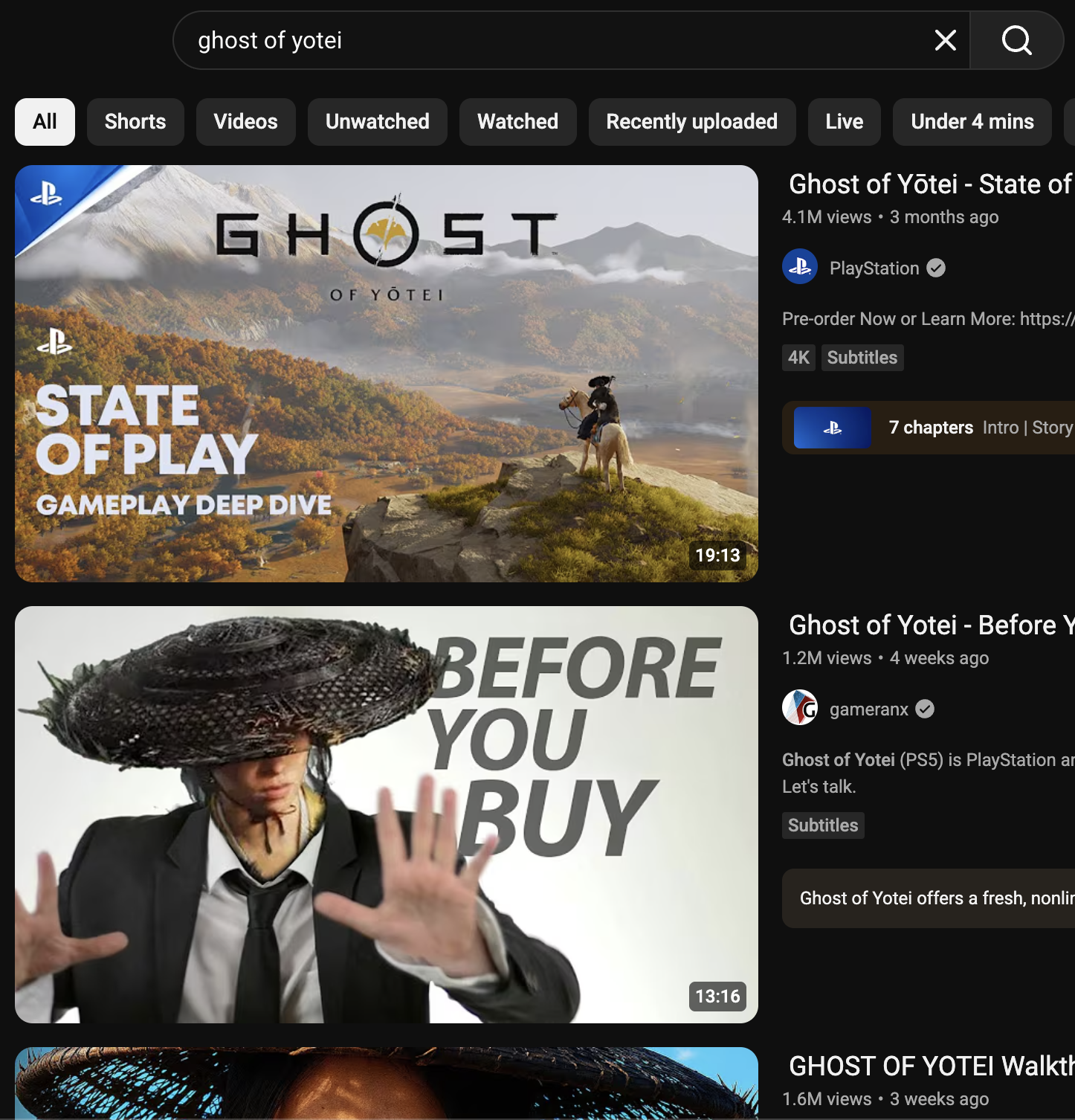
Chances are you're not going to rank for 'Ghost of Yotei'.
Finding low competition terms
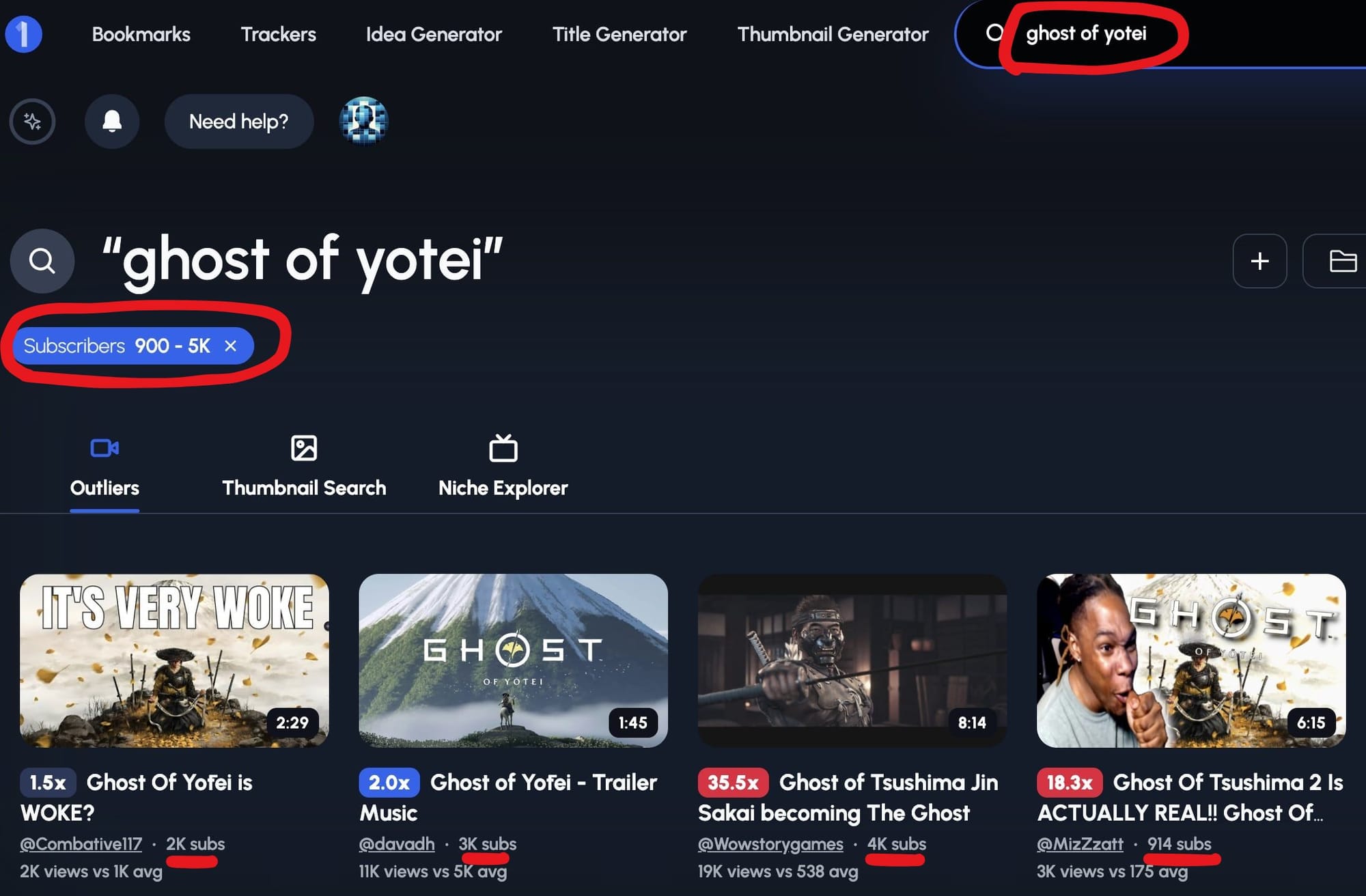
Using the 1of10 outlier tool...
This tool identifies videos from small creators that are significantly outperforming their channel's typical view count. When someone with few subscribers suddenly gets exceptional views on a specific topic, it signals untapped demand.
Use these breakout videos as inspiration to create your own content on topics that have already demonstrated their viral potential, backed by real performance data, not guesswork.
you can find videos on topics where people who don't have many subscribers are getting above average views for their channel.
You can draw inspiration from this and create videos of your own based on PROVEN videos.
Competition Analysis That Actually Works
Big creators in your game? That's not always bad news. Sometimes riding their wake gets you more views than dominating a dead game.
Check who owns the space. Search the game and filter by "This Month." If the entire first page is channels with 1M+ subs, you need a different angle. But if it's mixed sizes? There's room for you.
The sweet spot formula:
- 2-3 massive channels covering it (proves there's audience)
- 5-10 medium channels getting views (shows the algorithm shares)
- Recent videos from small channels with decent views (you can compete)
- Comments asking questions (opportunity for tutorial content)
Look at view-to-subscriber ratios. If someone with 10K subs is pulling 50K views on a game video, that game has reach beyond established audiences. That's your opportunity to grab non-subscribers through search and suggested.
Evergreen Gameplay vs. Trending Hype Games
Trending games are sugar rushes. Evergreen games are steady paychecks.
Hype games explode then die. Remember Fall Guys? Channels went from millions of views to nothing in three months. But Minecraft? Stardew Valley? Those videos from 2019 still pull views today.
Trending games work when:
- You can upload within the first week
- You've got time for daily uploads during the hype
- You're ready to pivot when it dies
- You're using it to convert viewers to your personality
Evergreen games need different tactics:
- Focus on searchable content (guides, tutorials, builds)
- Create series people binge
- Update content when major patches drop
- Build around game mechanics, not just "Episode 47"
The smart play? Mix both. Ride trending waves for discovery, build evergreen libraries for long-term growth. One feeds today, the other feeds tomorrow.
Indie Games That Nobody Saw Coming
Vampire Survivors had 10 creators covering it. Then it exploded. Early adopters became the go-to channels overnight.
Finding the next indie hit isn't luck, it's process:
- Check Steam's "New and Trending" weekly
- Follow indie games on X (developers leak everything)
- Play Steam Next Fest demos religiously
Signs an indie might blow up:
- Unique mechanic that's memorable
- Big streamer plays it once and chat goes wild
- Reddit posts hitting r/gaming front page
- Steam reviews saying "crack cocaine in game form"
Find Under-Served Audiences No One Else Makes Content For
Mobile Gamers: The Billion-Dollar Blindspot
Mobile gamers aren't just kids playing Candy Crush anymore. They're dropping serious cash on Genshin Impact, Call of Duty Mobile, and Wild Rift. These aren't "casual" gamers, they're gamers who game differently.
Content that crushes in mobile:
- F2P guides (how to compete without spending)
- Gacha pull strategies and tier lists
- Touch control tutorials and sensitivity settings
- Phone performance comparisons for gaming
- "Is it worth it?" for paid mobile games
The kicker? Mobile game developers are desperate for creators.
Retro and Emulator Communities: Nostalgia That Never Gets Old
These viewers aren't looking for news. They're looking for someone who gets why Final Fantasy VI still hits different.
Retro communities are fiercely loyal because most creators abandon them for newer games. Cover their favorites with respect, and they'll support you forever. But half-ass it? You're dead to them.
What retro audiences actually want:
- Deep dives into game development history
- Mod showcases and romhack reviews
- "Did you know?" content about classic games
- Comparison videos (original vs. remakes)
- Emulator setup guides that actually work
The emulator crowd needs different content. They're not asking "what's new?" but "how do I get this running?" Technical tutorials, performance optimization, and legal ways to play classic games pull massive, desperate search traffic.
Face-less / Voice-less Gaming Channels: The Introvert's Paradise
Not everyone wants to be a personality. Some creators just want to create, and there's an audience that prefers it that way.
No commentary channels thrive on pure gameplay excellence. Speedruns, no-hit runs, perfect stealth, satisfying gameplay loops, people watch these like ASMR. Your gameplay becomes the star, not your personality.
This format works because:
- International audiences don't face language barriers
- Viewers can listen to their own music/podcasts
Production gets simpler but standards get higher. Every edit needs purpose, every clip needs to earn its runtime. Use text overlays for context, let gameplay tell the story, and master the art of visual comedy through editing.